


The Blues that Shaped Painting
Throughout history, painting has served as one of humanity’s oldest and most defining forms of artistic expression. However, as we cycle through gallons of paint for each gallery show, work of art, or project, it is often overlooked where these silky pigments originate.

Egypt, Upper Egypt, Nile Valley, Dendara temple dedicated to Goddess Hathor, the hypostyle hall, low relief of the ceiling.
Beneath the creative exterior of paintings, lies a rich history, over thousands of years, of scientific and historical innovation. For many centuries, the color blue in particular was nothing short of a luxury with many pigments worth more than their weight in gold. Over time, the color gradually transformed from a symbol of wealth and exclusivity into one of the most accessible pigments on the artist’s palette. While civilizations around the world developed their own remarkable blue pigments and dyes – from Mayan blue in Mesoamerica to cobalt glazes in China – this timeline follows the pigments that shaped the European tradition of painting and, by extension, much of Western art history.
With a reputation of being extremely hard to come by in nature, the first known synthetic blue pigment emerged in Ancient Egypt around 3000 BCE.
With a reputation of being extremely hard to come by in nature, the first known synthetic blue pigment emerged in Ancient Egypt around 3000 BCE. Created for use across painting, sculpture, architecture, and decorative arts, Egyptian blue represented one of humanity’s earliest feats of chemical engineering. Although lapis lazuli could produce a rich blue pigment, its rarity made it prohibitively expensive, while indigo was primarily used as a textile dye. This predicament left artisans searching for a durable, affordable blue for painting and decoration. Created from a mix of minerals and elements like quartz, copper and lime, the new invention dubbed ‘Egyptian blue’ was a marvel of ancient scientific knowledge. While considered a highly influential color in its time, the recipe was lost for centuries after the fall of the Roman Empire when manufacturing hubs disappeared and the recipe stopped being passed down through generations. It wasn’t until the 19th century that the recipe was finally recreated by chemists and by then, many other blues had already taken its place.

The Virgin and Child with Saint Peter and Saint Paul, c. 1460, Workshop of Dirk Bouts

Christ Taking Leave of His Mother, 1520, Albrecht Altdorfer
While already in production for a similar amount of time as the highly sought-after Egyptian Blue, Azurite Blue wasn’t necessarily the go-to material until it eventually filled in the gaps that Egyptian Blue left, launching the underdog pigment into widespread use during medieval times and the Early Renaissance. Azurite Blue was a natural pigment discovered by the Egyptians but had an unfortunate flaw that lowered the archival quality of works made with it: the mineral azurite had the natural tendency to morph into malachite over centuries. As copper carbonate minerals, azurite and malachite are prone to chemical alterations, leading to bright blue azurite-painted skies to, at times, become murky green hues centuries after creation.
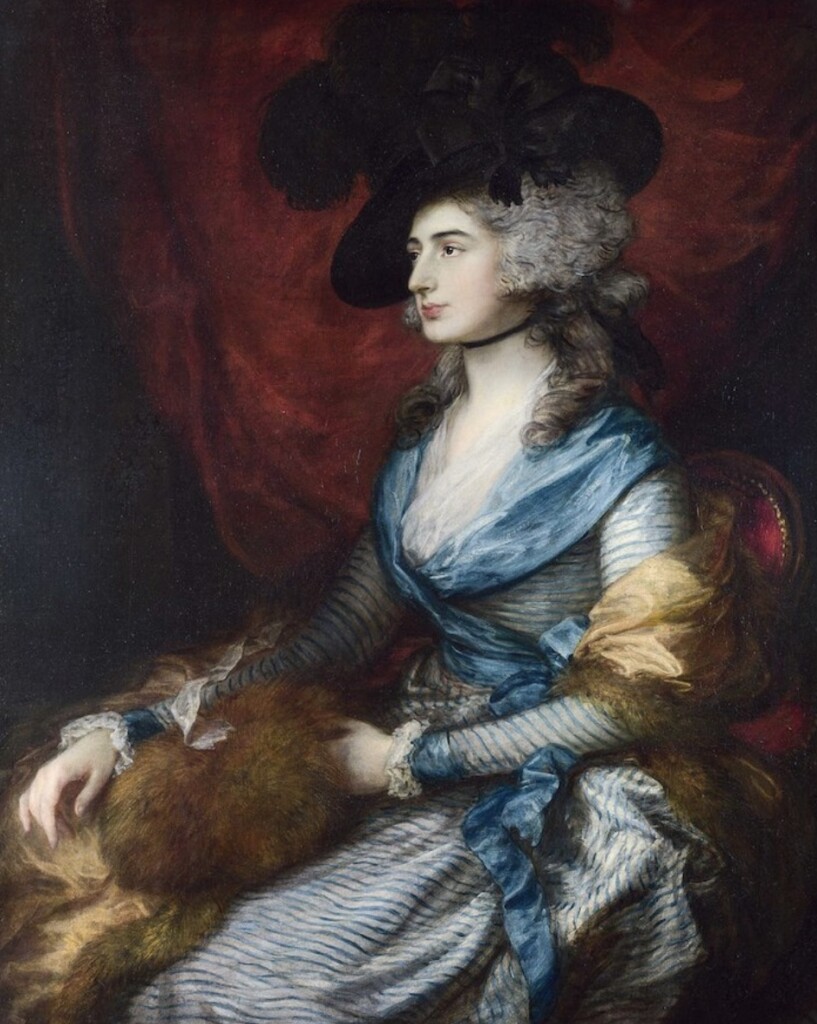
Portrait of Mrs. Sarah Siddons (1755-1831), 1785, Thomas Gainsborough
Many modern creatives that dabble in art history may recognize the pigment ultramarine to have been the leading blue during the Middle Ages and early modern period. However, azurite dominated over ultramarine as an everyday pigment due to an astounding cost discrepancy between the two. While the mineral azurite was rather plentiful in several European countries, the mineral needed for ultramarine was scarce and complicated to source. Lapis lazuli was found almost exclusively in a remote mountain region of modern-day Afghanistan, requiring tireless work mining, in addition to a multi-thousand-mile journey across the silk road via archaic transportation methods. This was just to source the lazurite, which then needed to go through an intense, lengthy purification process involving a multitude of ingredients to become a pigment. On the other hand, azurite simply needed to be crushed into a powder. While ultramarine tends to dominate our understanding of historical blue pigments, it was remarkably scarce and expensive. Its association with elite patronage meant that works commissioned by nobles, monarchs, and the Church were more likely to survive and be celebrated, giving ultramarine a disproportionately prominent place in art history from the Middle Ages to the Renaissance.
Around the close of the Renaissance, in the early 1600s, copper and silver mines around Europe began to dwindle as new American mining operations proved more affordable. Unfortunately, as a byproduct of copper and silver mining, the collection of azurite fell stagnant, skyrocketing the price of the once-common mineral. With no affordable blue pigments at their disposal, Europeans who could still not afford ultramarine and azurite began experimenting with a ground potassium-cobalt glass pigment called ‘smalt.’ The rise of this new pigment was shortlived, however, due to poor hue permanence when used in oil paints, turning gray over time. Even with its quick drying time and cheap price tag, the competition would prove to outweigh its legacy. Despite this, smalt still had a moment to shine, being used by renowned artists like Rembrandt Van Rijn and Johannes Vermeer.
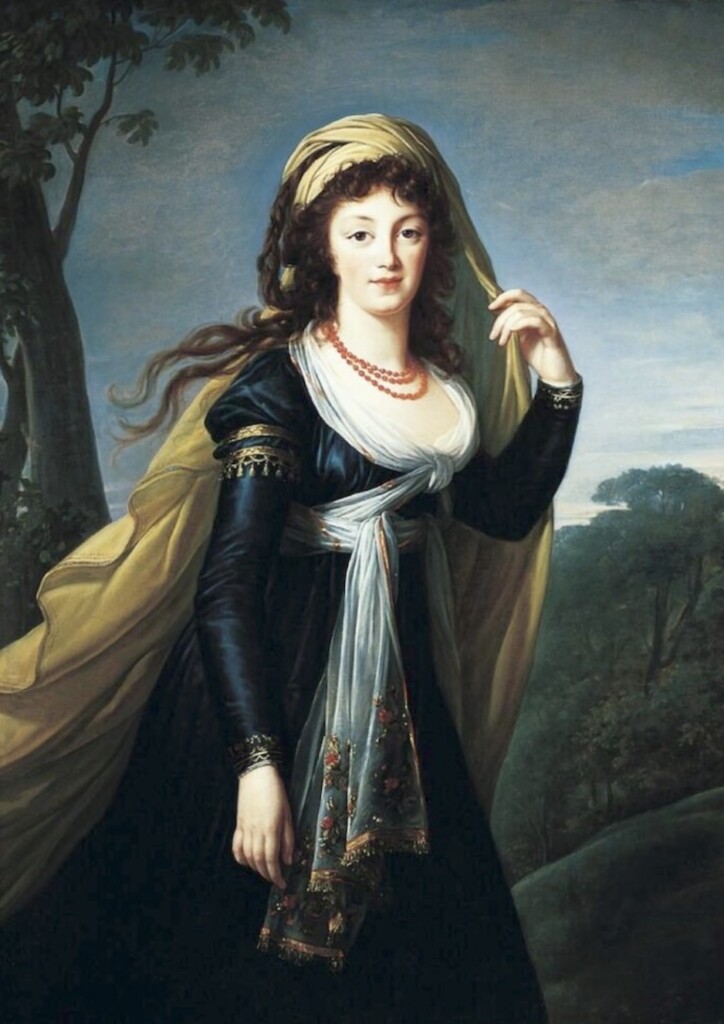
Portrait of Theresa Countess Kinsky, 1793, Louise Elisabeth Vigée-Lebrun
As quickly as smalt came and went, a new pigment would take over in 1704 that proved to revolutionize the color blue in art forever. This, of course, was the accidental invention of Prussian Blue. Working at a Berlin laboratory as a guest colorist, Johann Jacob Diesmach was attempting to make a deep, luxurious ‘red lake’ pigment by combining cochineal insects, iron sulfate, and potash. Due to a shortage of potash in the lab, Diesmach used a recycled batch which, unbeknownst to him contained animal-derived residues from a previous experiment. The result was startling. Instead of a rich red hue, the mixture was at first a pale purple. Then, it turned a vibrant shade of deep blue. Within just a few years, the color was making rounds across Europe before exploding into a worldwide phenomenon, spreading to North and South America, Africa, and even Asia. This new discovery brought paint-making into the modern era, chartering a path for future synthetic pigments that would prove to revolutionize the art-making process.
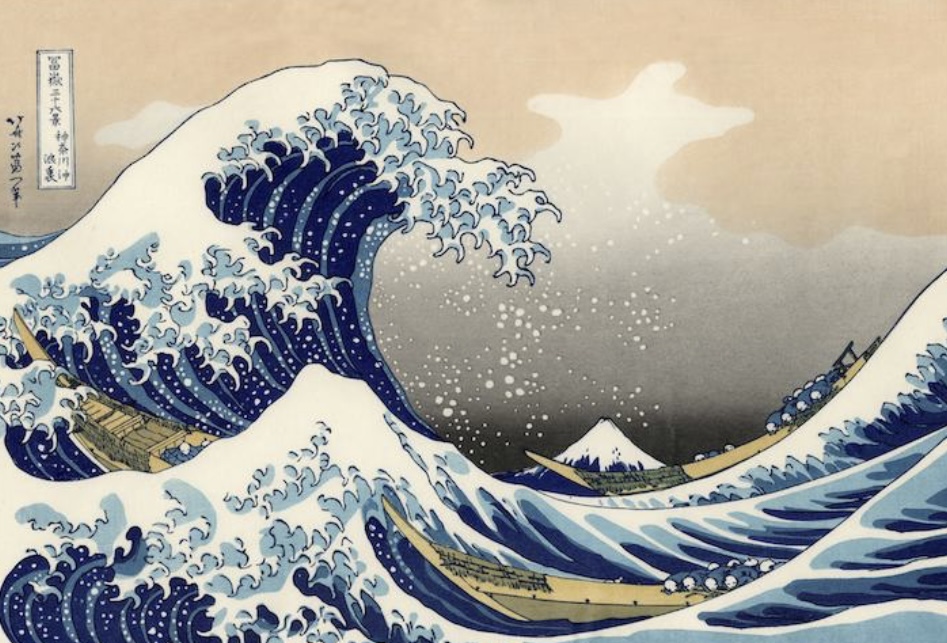
Kanagawa-oki Nami Ura, 1831, Katsushika Hokusai
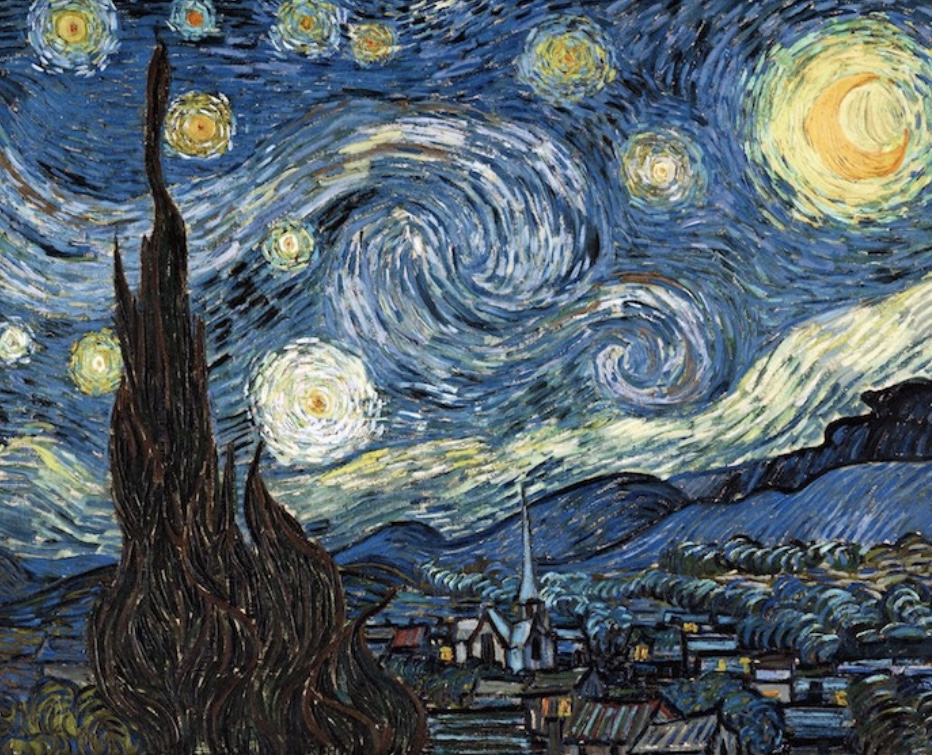
The Starry Night, 1889, Vincent van Gogh
It wasn’t until over 100 years later that Prussian blue would meet its first opposition: the invention of cobalt and, later, cerulean blues, which offered excellent heat and light resistance, alongside the innovation of synthetic ultramarine, which provided the invaluable reddish blue hue of natural ultramarine without the unnecessarily expensive and labor-intensive process. While each of these blues since Prussian blue have since remained steadfast in our lexicon of paint colors, phthalo blue proved to surpass them all.
Similar to Prussian blue, phthalo blue was first synthesized in 1928 – over 200 years after the discovery of Prussian blue – by happenstance when a batch of phthalimide produced a never-before-seen dark blue, crusty contaminant. After scientific investigation, researchers identified the contaminant as a copper-based molecule that produced a rich, deep blue. The newly discovered pigment proved invaluable as a higher intensity, longer lasting, and more true-to-color form of blue when compared to Prussian blue. Today, phthalo blue remains on top as the most widely used blue pigment for paints in the world, having essentially replaced Prussian blue, while synthetic ultramarine still remains number two.
Each new blue, from Egyptian blue to phthalo blue, solved the limitations of the one before it
In our contemporary world, a tube of phthalo blue can be purchased for just a few dollars, making it easy to forget that artists once crossed continents, relied on rare minerals, and spent fortunes in pursuit of often low-quality color. The story of blue pigments serves as a reflection of humanity’s ingenuity, trade networks, and evolving relationship with art itself. Each new blue, from Egyptian blue to phthalo blue, solved the limitations of the one before it, gradually transforming blue from one of history’s rarest luxuries into one of its most accessible colors, carrying with it over five thousand years of experimentation and accidental innovation. Although this journey follows the pigments that shaped European painting, blue has led many parallel histories around the world, each reflecting the region’s own scientific discoveries, trade networks, and artistic traditions.